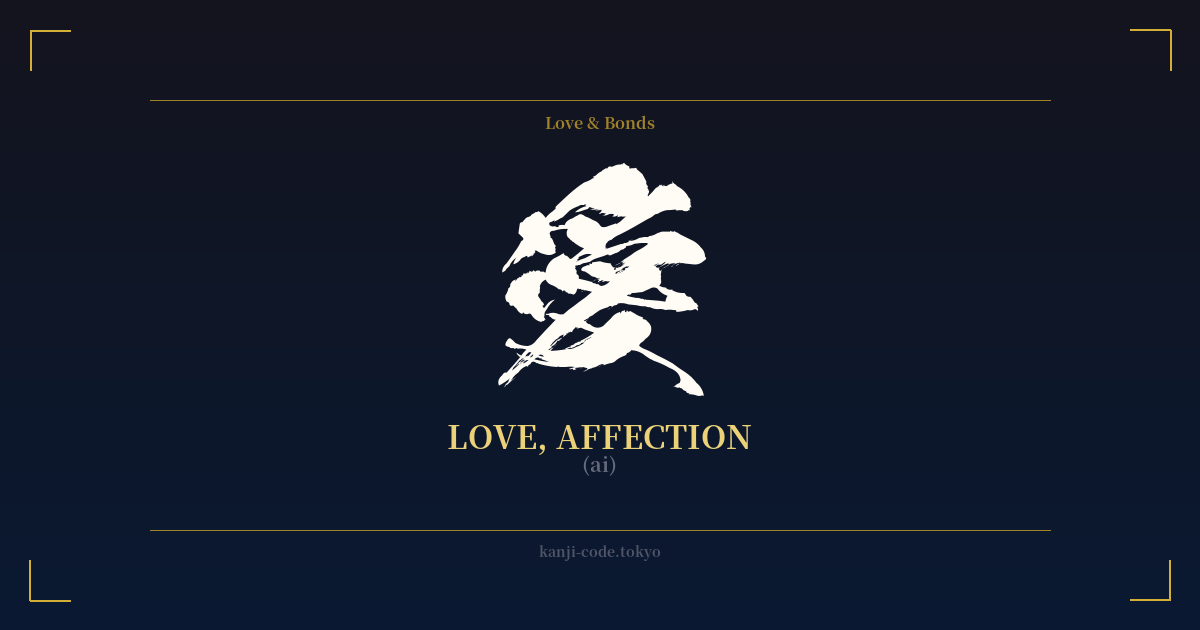
✍️ 愛 (ai) — Contexto cultural
El kanji 愛 (ai) es, sin duda, uno de los caracteres más reconocidos y con mayor carga emocional del idioma japonés. Encarna un amplio espectro de afecto, desde la pasión ardiente del amor romántico hasta el vínculo profundo e incondicional entre los miembros de la familia y el amor humanitario hacia todos los seres.
Sus antiguos orígenes pictográficos cuentan una hermosa historia. El carácter es una combinación de formas más antiguas, donde el componente central 心 (kokoro) representa el corazón. Los elementos que lo rodean originalmente representaban a una persona exhalando un suspiro o una mano extendiéndose para abrazar, sugiriendo un sentimiento que te llena y se desborda: una conexión profunda y sincera que implica tanto dar como recibir.
Curiosamente, el concepto de 'amor', tal como se entiende hoy en Occidente, es una interpretación relativamente moderna en Japón. Introducido originalmente por el budismo, 'ai' conllevaba una connotación más compleja, a veces negativa. Estaba vinculado a 'aizen' (愛染), una forma de apego o anhelo mundano que podía conducir al sufrimiento; algo que debía trascenderse en lugar de celebrarse. Era un vínculo, pero uno que podía atraparte.
Todo cambió durante la Restauración Meiji a finales del siglo XIX. Con la apertura de Japón a Occidente, se necesitaban palabras para traducir nuevos conceptos como el 'amor' en el sentido cristiano o romántico. Se eligió el carácter 愛 y su significado se transformó. Se le imbuyeron los ideales del amor romántico (恋愛, ren'ai), la devoción familiar (家族愛, kazoku-ai) e incluso la filantropía.
Hoy en día, 愛 es omnipresente en la cultura japonesa. Lo escucharás en innumerables baladas de J-pop, lo verás en los nombres de queridos personajes de anime y lo encontrarás en nombres de pila comunes como Aiko (愛子), que significa "hija del amor". Es el tema central del famoso lema del teletón de 24 horas, 「愛は地球を救う」 (Ai wa Chikyū o Sukuu), o 'El amor salva la Tierra'.
Este personaje logra capturar la cálida serenidad de un abrazo maternal, la intensidad de un primer beso y la lealtad inquebrantable de un viejo amigo. Representa una conexión que trasciende el simple afecto, tocando una necesidad humana fundamental de pertenencia y cariño. Es un poderoso símbolo de los lazos que nos unen y dan a la vida su sentido más profundo.
🖌️ Estilos de fuente para 愛
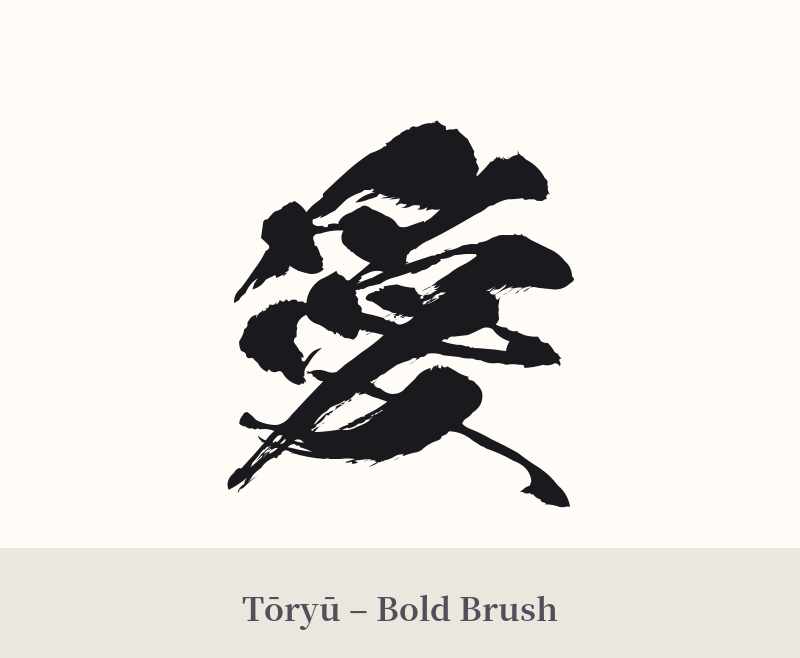
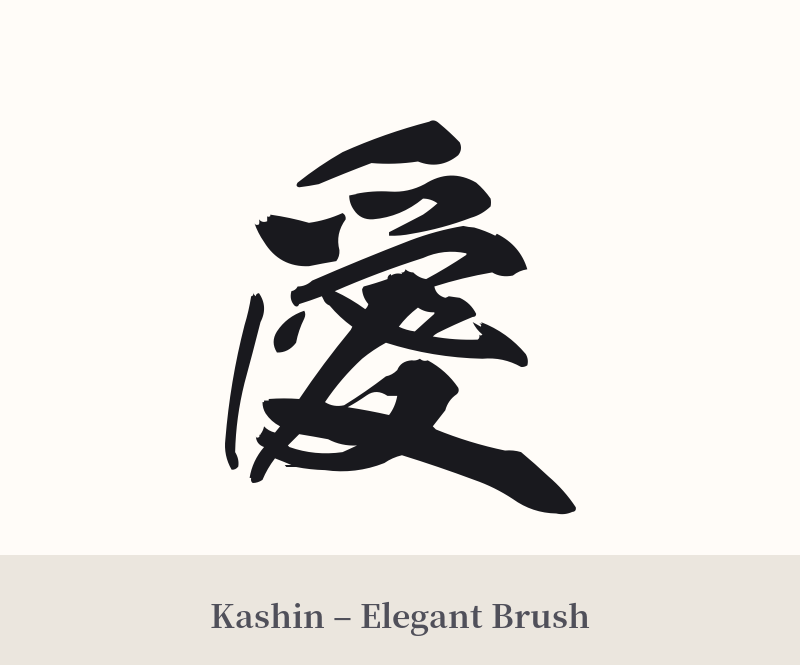
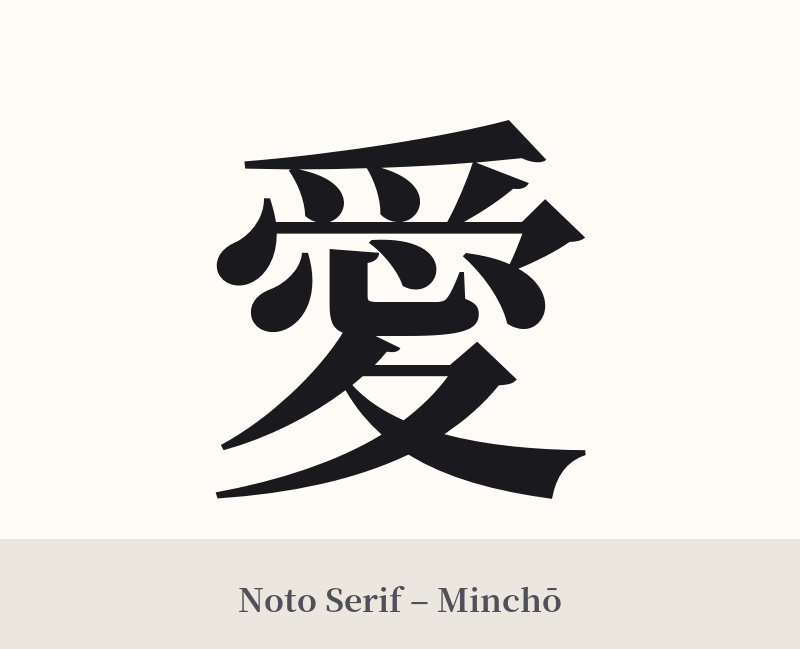
Los mismos caracteres kanji pueden verse muy diferentes según el estilo de caligrafía. Elige una fuente que se ajuste al ambiente que deseas para tu tatuaje o diseño.
🎨 Idoneidad para tatuajes
📐 Guía de diseño de tatuajes
El kanji 愛 es versátil y tiene una gran carga emocional, lo que lo convierte en una opción fantástica para un tatuaje. Su forma equilibrada permite una amplia gama de interpretaciones artísticas.
– Sugerencias de ubicación: Para un toque sutil y personal, considere la parte interna de la muñeca, detrás de la oreja o en el tobillo. Para una pieza más llamativa, el antebrazo, la nuca o el omóplato son excelentes opciones. Su simetría vertical también lo hace adecuado para colocarlo a lo largo de la columna vertebral.
Estilos de fuente recomendados: Para enfatizar la naturaleza emotiva y fluida del amor, una caligrafía semicursiva (gyōsho) o completamente cursiva (sōsho) es una excelente opción. Estos estilos añaden una sensación de movimiento y pasión. Para un estilo más audaz y contundente, una letra de imprenta limpia (kaisho) con trazos gruesos puede transmitir un mensaje poderoso.
– Adornos visuales: Si bien 愛 es un símbolo lo suficientemente fuerte por sí solo, combina a la perfección con otras imágenes. Considere entrelazarlo con flores de cerezo (sakura) para representar la belleza y la naturaleza efímera de la vida y el amor, o colocarlo dentro de un ensō (círculo zen) para simbolizar la eternidad y la plenitud. Un efecto de salpicadura de acuarela detrás del carácter también puede añadir un toque artístico y moderno que refleje su significado fluido.
Comentarios